Here Comes the Bus
- 3.4
- Rating
- 1.00M
- Installs
- Free
- Price

 Analysis by App-foxy
Getting a child to the bus stop at the right moment sounds simple until the morning routine includes breakfast, bags, weather, traffic and a bus that may not arrive exactly when expected. Here Comes the Bus is an education app built around that daily problem. I see it as a practical companion for families whose school transportation service is supported by the app, rather than as a general-purpose school planner or a replacement for contacting the school.
My first impression is that its appeal comes from reducing unnecessary waiting. Instead of sending a child outside far earlier than needed, a parent can use the app to check the bus journey and make the final part of the morning more deliberate. That sounds modest, but it can matter a great deal when children are young, the weather is unpleasant, or an adult is trying to coordinate several people at once.
How the app fits into a school-bus routine
Here Comes the Bus is a free education app from CalAmp Student Safety, formerly known as Synovia. It is aimed at families who want bus-related information on a phone, with the central idea being better timing around the stop. The app has been available since April 3, 2015, and its current version is 4.0.6. It supports Android 7.0 and later, so owners of older devices should check compatibility before planning around it.
You May Also Like

 Blood Strike: 2.5 Anniversary
Blood Strike’s Loadouts Turn Every Drop Into a Tactical Gamble
A close look at Blood Strike’s custom loadouts: how fast access to signature weapons reshapes its battle royale rhythm, rewards preparation, and narrows the gap between fights.

 Pandora - Music & Podcasts
Pandora’s Music Is Easy to Start, but Harder to Recover
Pandora’s strength is its low-effort path from a seed to a station. Its weak spot is how much confidence it asks you to place in connection, setup, and quiet recovery.

 8 Ball Pool
 Is Built on Rivalries, Rematches, and Routine
A close look at the rivalries, rematches, shared routines, and unanswered safety questions that turn a quick pool match into a persistent mobile community.

 Samsung Music
’s Quiet Strength Is Playing What You Already Own
Its reach comes less from spectacle than from dependable access to a personal library. That simplicity is both the app’s strongest retention engine and its ceiling.

 AccuWeather: Weather Radar
AccuWeather Review: A Quick, Clear Forecast for Everyday Decisions
For everyday plans, the best forecast is the one you can understand quickly. AccuWeather makes rain timing, radar, and local conditions easy to act on, with a few trade-offs.

 Hill Climb Racing
Why Hill Climb Racing Still Turns Crashes Into One More Run
A tiny car, a bumpy hill and one more upgrade: Hill Climb Racing keeps resurfacing because its simple chaos makes every near-miss feel personal.
More From Our News Desk



The most important practical point is that this is not simply a map that works for every school bus in every location. Its usefulness depends on the transportation service connected to the school or district. If that service does not support the system, installing the app alone will not turn it into a universal tracker. I would check with the school transportation office first, especially before relying on it for a child’s first day or for a time-sensitive morning.
That dependency shapes the whole experience. When the local service is connected, the app can become part of a family routine. When it is not, the app is not an alternative to the school’s own notices, printed schedule or transportation contact. This is an important distinction because the store summary makes the timing benefit sound immediate, while the real value begins only after the relevant school-bus setup is in place.
In everyday use, I would treat it as one piece of a broader plan. I would still teach a child the normal stop time, keep the school’s contact details available, and allow extra time for walking and getting ready. A phone display should help with decisions, not become the only safety instruction a child follows.
A realistic morning with Here Comes the Bus
Imagine a family whose child normally waits near the end of the street. On a cold morning, the parent can prepare breakfast and school clothes without immediately sending the child outside to stand at the stop. Once the bus is getting closer, the family finishes coats, checks the backpack and walks out together. The useful change is not that the app eliminates the schedule; it gives the parent another signal for deciding when the waiting part should begin.
That workflow is especially helpful when the adult is working from home, caring for a younger sibling or managing a child who dislikes standing outside for long periods. It can also help a child become more independent: the parent can use the app to explain the routine, then gradually let the child take responsibility for shoes, coat and bag after the timing check.
There is a subtle trade-off here. A live-looking arrival estimate can encourage people to leave later than they should. Walking time, crossing roads, finding a missing glove and unexpected traffic still exist. I would use the app to refine the departure moment, not to cut the margin down to the last possible minute. For younger children, an adult should remain responsible for the decision.
What I would set up before trusting it
Before the first real test, I would confirm the correct school, route and stop details through the local transportation office or school instructions. A family can waste time troubleshooting a phone when the actual issue is an incorrect account setup or an unsupported service. This is one of the less obvious lessons with a district-connected app: the quality of the local transport data matters as much as the quality of the application itself.
I would also test the routine on a normal school day rather than during a rushed morning. Open the app, compare what it shows with the school’s expected schedule and decide where the phone will be kept. If several adults handle school mornings, everyone should understand the same plan. That prevents one person from assuming the child has already left while another is still waiting for an update.
For families sharing responsibility between parents, grandparents and babysitters, the app can be useful as a common reference point, but it should not replace direct communication. If the child misses the bus, the vehicle is delayed for an unusual reason, or the phone is unavailable, the family needs a backup plan that does not depend on the screen.
Free access, practical value and the limits of that value
Here Comes the Bus is free to download, which makes the initial decision straightforward: there is no purchase price to weigh against the possible convenience. That does not mean every family receives the same value. The real question is whether the local school transportation service supports it and whether the family benefits from more precise timing than a fixed paper schedule provides.
Because access is free, I judge the app mainly by the time and uncertainty it can remove. A parent who regularly waits outside with a child may find the benefit meaningful even if the app is used only once each school morning. A family whose bus arrives consistently and whose stop is close to home may gain very little. Free access lowers the financial risk, but it does not remove the need to spend a few minutes setting up a reliable routine.
The app also has a broad reach. It has more than one million installs, an Everyone content rating and an average rating of 3.4 from around twenty thousand ratings. Those figures suggest a service that many families have tried, while also warning me not to treat it as universally smooth. A middling average can reflect different school systems, device conditions and expectations, so I would pay more attention to whether the local transportation provider actively supports it than to the rating alone.
Its review volume is also substantial, with about eight thousand nine hundred reviews. I see that as evidence that users have encountered enough real-world situations to form strong opinions, but not as a guarantee that the same experience will apply to every district. A bus-tracking tool is unusually dependent on local data, route configuration and school communication. Two families can install the same app and receive very different value.
Where the free model works well
The free model is a good fit for a parent who wants to try a supported school-bus service without committing money to another subscription. It is also useful for households that need occasional reassurance rather than constant monitoring. For example, a parent may check the bus on days when a child has an early activity, when weather changes the morning routine, or when the household schedule is unusually tight.
I like that this makes experimentation sensible. Rather than buying a dedicated tracking device or paying for a separate family-location service, a supported school-bus user can first see whether the school’s own system solves the problem. That is a more focused approach: the app is about the school journey, not about tracking every member of the household all day.
Still, “free” should be understood as free access to the app, not as a promise that every transportation feature will be available everywhere. The school or district connection remains central. If a family downloads it without confirming local support, the result may be frustration rather than savings because time is lost trying to make an unsupported arrangement work.
What it does better than ordinary alternatives
The usual alternative is a printed schedule, a school message or a parent simply waiting for the bus to appear. Those options are easy to understand and remain valuable as backups, but they do not adapt as well to a morning when arrival timing changes. Here Comes the Bus has a narrower but more useful role: it can add a current transport signal to the fixed information families already have.
It is also more focused than a general family-location app. A location-sharing service may show where a phone or person is, but it is not necessarily designed around a school route or a child’s bus stop. Here Comes the Bus makes more sense when the question is, “When should we start getting ready for this school journey?” rather than, “Where is everyone in the family?”
On the other hand, a school’s own communication channel may be better for cancellations, policy changes, emergency instructions or route-wide announcements. I would not choose this app instead of official school messages. I would use it alongside them, because arrival timing and transportation notices are different kinds of information.
Trade-offs that matter in real use
The biggest trade-off is convenience versus overconfidence. A parent may feel safer because the bus appears to be approaching, but that confidence can become a problem if the family leaves too late or assumes the displayed information is the same as a guarantee. The safest habit is to build in a walking margin and keep the child supervised according to the family’s normal rules.
Another trade-off is simplicity versus dependence on setup. A basic paper schedule works without an account, phone battery or data connection. This app offers more timely guidance, but it requires the supported service, a compatible device and a family willing to check the screen. If a household has unreliable connectivity or does not want another daily phone task, the traditional schedule may actually be less stressful.
The app’s age rating of Everyone makes sense for a family-facing education tool, but I would still keep the adult in charge of how a child uses it. An age rating describes suitability of content; it does not decide whether a child is ready to travel independently or interpret transportation information without help.
There is also a human factor that is easy to overlook. If the bus is late, a child may repeatedly ask whether it is coming, and the parent may keep refreshing the app instead of contacting the school when the delay becomes unusual. I would set a simple rule: use the app for normal timing, then switch to the school or transportation office when the situation falls outside the expected routine.
Small habits that make it more useful
First, use it as a preparation trigger rather than a departure command. When the bus is approaching, start the final checklist: coat, shoes, backpack, lunch and any required school item. This turns a single arrival display into a repeatable household process and reduces the temptation to wait until the last second.
Second, keep a written backup of the normal stop details. This is valuable when the phone battery is low, the child is staying with another caregiver or the app behaves differently than expected. The written schedule is not competing with the app; it gives the family a stable reference for judging whether an update looks ordinary.
Third, compare the app’s practical usefulness across different days before changing the family’s routine. A single successful morning does not prove that every day will behave the same way. I would observe whether the information arrives early enough to be useful, whether the route timing matches what the child experiences and whether the extra phone check genuinely reduces stress.
Finally, avoid turning the app into a reason for a child to use a phone unsupervised near the road. The most valuable workflow is still basic: stay in a safe waiting place, watch for the bus appropriately and follow the school’s road-safety instructions. The app can improve timing, but it cannot replace those habits.
Who should use it, and who should skip it
I would recommend trying Here Comes the Bus to families whose school or district explicitly supports it, especially when a child waits outdoors for a long time or when bus arrival times vary enough to disrupt the morning. It is also a sensible option for households coordinating several caregivers, provided everyone understands that the app is a timing aid rather than a complete transportation policy.
It may be particularly helpful for children moving from a parent-led morning to a more independent routine. An adult can use the app as a teaching tool, showing how preparation happens before leaving and why a safe margin matters. That gradual approach is better than handing over the phone and expecting a child to make every judgment alone.
I would skip it, or at least postpone relying on it, if the school does not support the service, if the family already has a dependable routine with no waiting problem, or if the household cannot maintain a backup plan. I would also prefer the school’s official communication tools when the main concern is cancellation information rather than ordinary arrival timing.
Families using older Android hardware should pay attention to the minimum operating-system requirement of Android 7.0. The current version is 4.0.6, and keeping the app updated is sensible, but an update cannot make an incompatible phone suitable. iPhone users should check the relevant App Store requirements before installing, since the Android requirement does not answer every platform question.
My verdict on the free download
My opinion is positive but deliberately conditional. Here Comes the Bus offers a focused solution to a specific family problem, and its free price makes trying it worthwhile when the local school-bus service supports it. I would not describe it as essential for every household, because a fixed schedule and a reliable stop can be enough.
The app delivers the most value when timing is the difficult part of the school journey. It can help a parent avoid sending a child out unnecessarily early, organize the final minutes before departure and share one transport reference with several caregivers. Those benefits are practical rather than flashy, which is exactly why the app can earn a place in a family routine.
At the same time, I would keep expectations realistic. The app is not a universal bus service, not a substitute for school notices and not a guarantee that a child can safely leave at the last possible moment. Its usefulness depends on local support and on the family using it with sensible margins.
For a supported district, I would try it because the financial barrier is absent and the potential convenience is clear. For an unsupported district or a family already satisfied with its schedule, I would skip it without feeling that I was missing a must-have tool. My recommendation is to treat it as a free timing assistant, not as the entire school-transportation plan.
FAQs for Here Comes the Bus
01What is Here Comes the Bus and who is it designed for?
Here Comes the Bus is a school transportation tracking app that helps families monitor the location and estimated arrival time of a child’s school bus. After signing in through a participating school district or transportation provider, parents and guardians can view bus movements, receive arrival notifications, and access route information. Availability and features depend on whether the local district supports the service.
02How do I sign up and connect my child to the app?
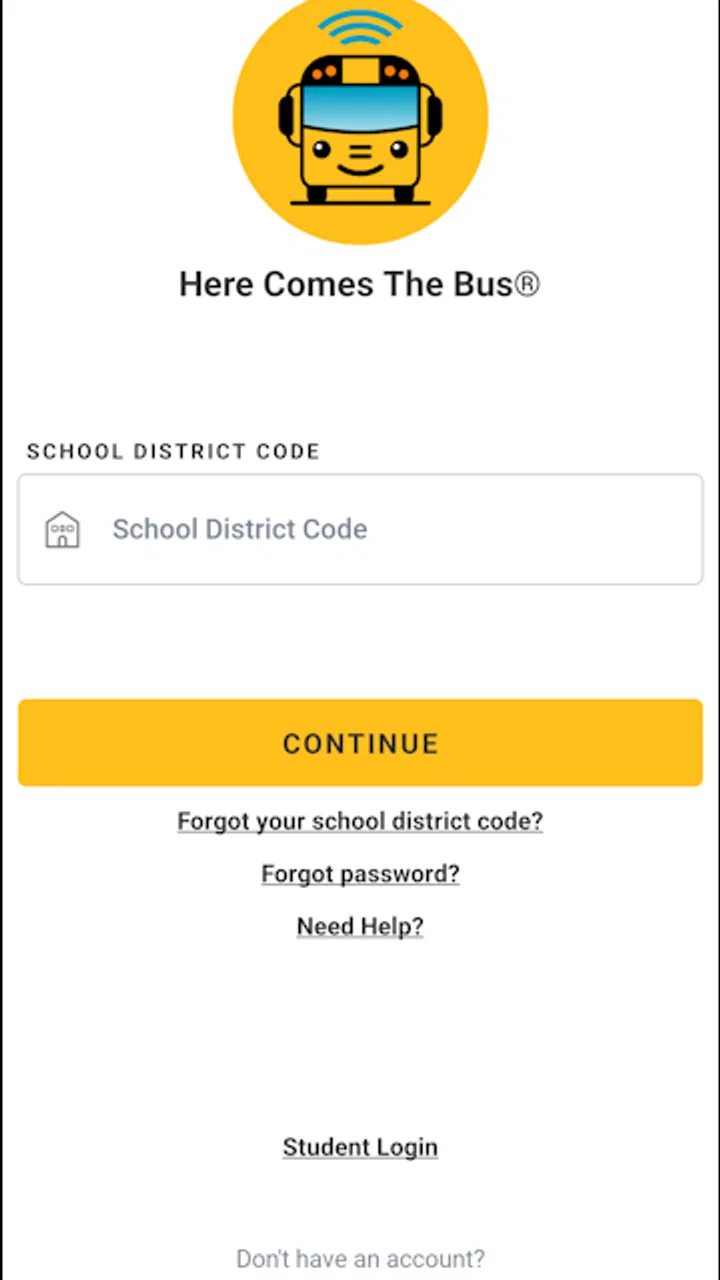
To use Here Comes the Bus, you generally need an account provided through a participating school district. Registration may require information such as your district, student identification number, or other details supplied by the school. Once verified, you can select the relevant student and configure transportation notifications. If your child does not appear, the school or transportation office may need to update its records.
03Does Here Comes the Bus show the bus location in real time?
The app can display the approximate position of a school bus and provide estimated arrival information when the vehicle is operating and transmitting data. The map is intended as a helpful guide rather than a guaranteed live schedule, since traffic, weather, GPS limitations, route changes, and driver or equipment issues can affect accuracy. Always allow extra time when waiting for the bus.
04What notifications and features are available in Here Comes the Bus?
Depending on the school district’s configuration, Here Comes the Bus may send alerts when a bus is approaching, has arrived, is delayed, or has completed a route. Users may also be able to view assigned routes, stops, schedules, and service announcements. Notification options can usually be adjusted within the app, but some features may not be enabled by every district or transportation provider.
05Is Here Comes the Bus free, and what should I check before downloading it?
Here Comes the Bus is typically available to families at no additional charge, although mobile data usage may apply and some districts may have their own enrollment requirements. Before downloading, confirm that your school district supports the service and that your device meets the current Android or iOS requirements. Also check that notifications, location-related permissions, and internet access are enabled for reliable updates.
Pros
- Real-time bus tracking helps reduce waiting at stops.
- Route and stop details make daily school travel easier to plan.
- Arrival alerts can help families prepare before the bus arrives.
- Useful for monitoring student transportation from almost anywhere.
- Simple interface is accessible for parents and guardians.
Cons
- Tracking depends on accurate data from the school district.
- Some features may be unavailable in participating areas.
- Requires location and notification permissions for full functionality.
- Arrival estimates can change because of traffic or GPS issues.
- The app is mainly useful for school bus transportation users.

Here Comes the Bus
Gallery